Good Pickle: A Whimsical Display Font for Playful Branding
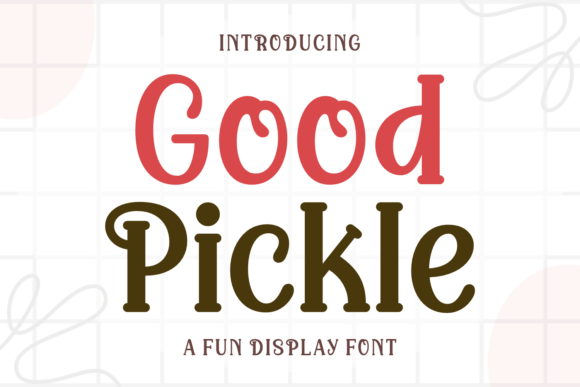
I was halfway through sketching a brand board for a boutique bakery when I stumbled upon Good Pickle. It felt like the perfect match—playful, lighthearted, and just the right amount of quirky to match the brand’s personality. As a display font, Good Pickle has this bouncy serif character that feels rhythmic and full of life. It's not just a font; it's a mood.
Good Pickle in Logo Design: A Quirky Touch for a Local Café
Testing Good Pickle on a logo concept for a local café was an eye-opening experience. The bouncy serif letterforms brought a sense of fun and approachability that traditional fonts often miss. I paired it with a clean sans-serif for body text, and the contrast worked beautifully. Good Pickle didn’t overpower the design but added a unique charm that made the logo feel more personal and inviting.
It performed well at larger sizes, which is crucial for logos. However, I noticed that smaller sizes lost some of their whimsy, so I recommend using it as a headline or accent rather than for long phrases or small details.
Good Pickle on Packaging Mockups: Elevating a Handmade Shop Identity
Next, I applied Good Pickle to a packaging mockup for a handmade shop. The font’s playful nature translated perfectly into the brand’s aesthetic—think handcrafted labels and custom tags. The rhythmic curves gave the packaging a dynamic look that stood out on shelves. It felt like the kind of font that could make a product feel more special and thoughtfully designed.
One thing I noted was that while Good Pickle is great for visual impact, it might not be ideal for lengthy product descriptions. For body copy, I used a complementary sans-serif font to maintain readability without sacrificing style.
Good Pickle in Social Media Graphics: Making a Statement with Style
When designing social media graphics for the same handmade shop, Good Pickle shone brightest. Used on Instagram posts and Facebook banners, it added a touch of whimsy that resonated with the target audience. The font’s lively character helped create a consistent brand voice across platforms, making each post feel like part of a cohesive identity.
I found that Good Pickle works best when used sparingly. Too much of it can become overwhelming, especially in fast-scrolling feeds. Balancing it with neutral backgrounds and minimalistic layouts kept the focus on the message while still allowing the font to shine.
Good Pickle for Web Design: A Playful Header Font
On the website header for the café, Good Pickle became the star of the show. Its display font characteristics allowed it to stand out against a simple background, creating a strong visual hierarchy. It didn’t feel too casual for a professional site, nor too formal for a fun brand—it struck the perfect balance.
I tested it across different screen sizes and found that it remained legible and visually appealing even on mobile devices. That said, for long-form content or dense paragraphs, I’d stick with a more readable typeface to ensure accessibility and user engagement.
Font Pairing and Licensing Considerations with Good Pickle
Pairing Good Pickle with other fonts was an interesting process. I found that combining it with a modern sans-serif or a minimalist script created a nice contrast that elevated the overall design. When used in commercial projects, I always check the licensing terms to ensure that Good Pickle is appropriate for use in branding materials, websites, and print-on-demand products.
It’s also worth noting that Good Pickle comes with a variety of styles and alternates that can add depth to your designs. Whether you're working on a brand identity package or a single graphic, these variations offer flexibility and creative freedom.
Overall, Good Pickle is a versatile display font that adds a whimsical flair to any project. From logos to web headers, it brings a playful yet professional tone that can elevate your brand’s visual storytelling. Just remember to test it thoroughly before finalizing client work and always consider its role within the broader typography system.